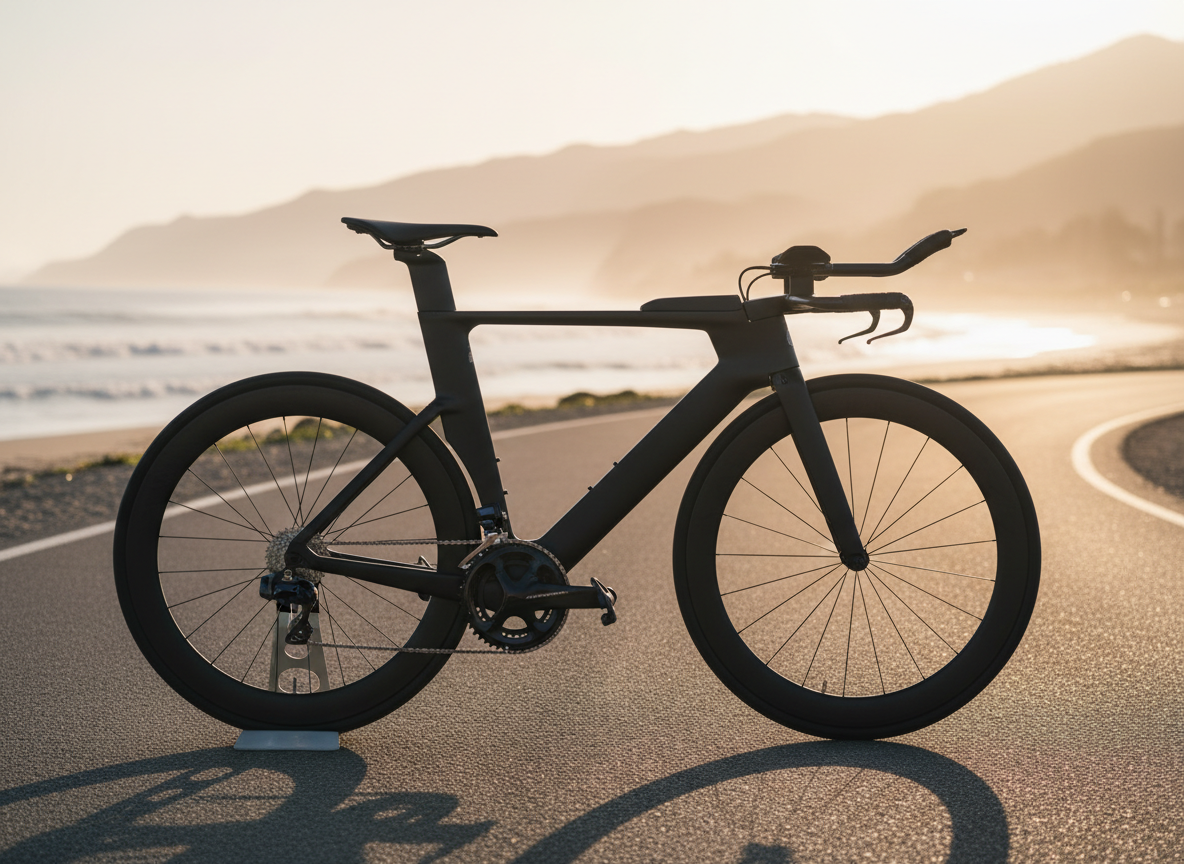
Best Value Triathlon Bikes in 2026: Entry-Level TT Bikes Compared
🚴 Bike Comparison
Value Triathlon Bikes Compared
This post contains affiliate links — we may earn a commission at no extra cost to you. See our full disclosure.
A dedicated triathlon bike is the single biggest speed upgrade most age-groupers can buy. It puts you in an aerodynamic position you can actually hold for 40, 90, or 180 kilometers, and its steep seat angle shifts the work toward your hips and quads in a way that leaves your hamstrings fresher for the run. The problem is price: the bikes you see at Kona routinely cost $10,000 or more.
This guide covers the value tier — complete tri bikes from major brands for roughly $3,500 to $6,000. One thing we noticed while researching it: the tier has gotten thin. In 2026, Felt, Giant, Trek, Scott, and BMC no longer sell a complete tri bike under $6,000 in the US, so the realistic shortlist is shorter than it was a few years ago. Prices below were checked on each brand’s own US site in late September 2026.
First: Do You Actually Need a Tri Bike?
Not always. A road bike with clip-on aero bars is the smarter buy if you’re doing your first season, racing mostly sprints, riding a lot of group rides, or racing draft-legal events (where tri bikes aren’t allowed). A tri bike earns its price once you’re racing Olympic distance and longer, where holding a low, efficient position for an hour or more adds up to minutes, not seconds.
If you’re buying one, prioritize in this order: fit, then brakes, then everything else. A bike you can’t get comfortable on will be slower than a cheaper bike you can hold an aero position on all day, which is why we’ve called out fit adjustability for every bike below.
Our Top Picks
| Bike | Price | Groupset | Brakes | Sold | Best For |
|---|---|---|---|---|---|
| Cervélo P-Series 105 | $3,950 | Shimano 105 12-speed (mechanical) | Hydraulic disc | Dealers | Best overall value |
| Argon 18 E117 105 | $4,399 | Shimano 105 12-speed (mechanical) | Hydraulic disc | Dealers | Best fit adjustability |
| Quintana Roo X-PR | From $4,449 | Shimano 105 (upgradable at checkout) | Mechanical disc | Direct | Best for a custom build |
| Quintana Roo Service Course Tri | From $3,615 | Configured at checkout | Varies by build | Direct | Best road/tri hybrid |
| Canyon Speedmax CF 7 Di2 | $5,999 | Shimano 105 Di2 (electronic) | Hydraulic disc | Direct | Best if you can stretch the budget |
Detailed Breakdowns
1. Cervélo P-Series 105 — Best Overall Value ($3,950)
The P-Series borrows its shape from Cervélo’s pro-level P5 and puts it on a carbon frame at the lowest price of any bike here. The base build gets Shimano’s current 12-speed 105 mechanical groupset, hydraulic disc brakes, alloy wheels with 28mm tires, and a Zipp Vuka Alumina base bar and extensions. Storage is well thought out: a tube, tool, and CO2 fit inside the frame, and a bento box and rear hydration mount are included.
Triathlon Magazine Canada called the current P-Series “all the bike that most triathletes would ever need,” and at this price it’s hard to argue. Cervélo’s wide size range and broad dealer network also make it the easiest bike here to get professionally fitted on before you buy.
Who it’s for: Most age-groupers. If you want one well-supported, well-fitting tri bike without overthinking it, start here. (Want electronic shifting? The 105 Di2 build is $5,700.)
Shop the Cervélo P-Series at Cervelo.com →
2. Argon 18 E117 105 — Best Fit Adjustability ($4,399)
Argon 18’s E117 matches the Cervélo on parts — 12-speed Shimano 105, hydraulic disc brakes, DT Swiss alloy wheels with 28mm tires — and costs $449 more. What you’re paying for is Argon’s “3D” head tube system, which offers up to three head tube heights per frame size. That lets a fitter raise or lower the front end without stacking spacers, and makes the E117 an unusually forgiving bike for riders with less flexibility or a longer torso.
Who it’s for: Riders who have struggled to get comfortable on other tri bikes, or who know they need a taller front end. Worth a look if a fitter tells you the Cervélo can’t get you where you need to be.
Shop the Argon 18 E117 at Argon18.com →
3. Quintana Roo X-PR — Best for a Custom Build (From $4,449)
Quintana Roo built the first dedicated triathlon wetsuit and one of the first dedicated tri bikes, and it now sells direct. The X-PR is made to order: you choose from six sizes, several Profile Design cockpit setups, and groupset upgrades from 105 Di2 up to SRAM Force AXS, and it ships in a few weeks. Top tube storage and between-the-arms hydration are built in.
The catch: the base build uses TRP Spyre cable-actuated disc brakes rather than hydraulic ones. They work, but they need more hand force and more frequent adjustment than the hydraulic brakes on the Cervélo and Argon, which is worth knowing before you compare sticker prices.
Who it’s for: Riders who want to spec their own bike (and paint) and are comfortable buying direct without a local dealer.
Shop the Quintana Roo X-PR at QuintanaRooTri.com →
4. Quintana Roo Service Course Tri — Best Road/Tri Hybrid (From $3,615)
The Service Course Tri splits the difference between a road bike with clip-ons and a full tri bike. It’s a UCI-legal aero road frame with forward, triathlon-oriented geometry and optional aero extensions, and Quintana Roo quotes it at about 16 pounds. You keep drop bars for group rides and draft-legal races, and add the extensions for non-drafting triathlons.
Who it’s for: Athletes who only have room (or budget) for one bike and split their time between group rides, draft-legal racing, and triathlon.
Shop the Service Course Tri at QuintanaRooTri.com →
5. Canyon Speedmax CF 7 Di2 — Best If You Can Stretch ($5,999)
Canyon’s current US lineup no longer includes a mechanical Speedmax, so its cheapest current tri bike is this one — and at $5,999 it’s above the rest of the field. But look at what’s included: Shimano 105 Di2 electronic shifting, a 4iiii power meter, DT Swiss 60/80mm carbon aero wheels, an integrated bento box, and a front hydration system. Buying those upgrades separately for any of the bikes above would cost well over the difference.
Who it’s for: Riders who would otherwise buy a base bike and then add a power meter and race wheels. Canyon sells direct, and some sizes were limited when we checked, so confirm availability in your size.
Shop the Canyon Speedmax CF 7 Di2 at Canyon.com →
What About Felt, Giant, Trek, and Scott?
All four still make excellent tri bikes, but none has a complete build in the value tier in 2026. Felt’s cheapest current IA starts at $6,899 (with 105 Di2), Giant’s Trinity and Scott’s Plasma start around $10,000 at US retailers, and Trek’s Speed Concept also starts well above $6,000. If one of these brands is on your list, look for previous-model-year stock at local shops rather than new builds.
What Actually Matters at This Price
Fit adjustability: Look for a wide range of sizes, an adjustable stack (how high the front end sits), and extensions you can move. Budget for a professional bike fit — typically a few hundred dollars, and the best money you’ll spend on a tri bike.
Hydraulic vs. mechanical disc brakes: All four dedicated tri bikes here use disc brakes, which stop far better in the wet than older rim brakes. Hydraulic discs are the better version — lighter lever feel, self-adjusting as the pads wear — which is why we flagged the X-PR’s cable-actuated brakes.
Mechanical vs. electronic shifting: Electronic shifting lets you shift from both the aero extensions and the base bar, which helps on hilly courses. It’s also the priciest upgrade at this level (about $1,750 more on the Cervélo). If you’re choosing between Di2 and a bike fit plus race wheels, the fit and wheels will usually make you faster.
Dealer vs. direct: Dealer bikes (Cervélo, Argon 18) come with a local shop for fitting, assembly, and warranty help. Direct brands (Quintana Roo, Canyon) often give you more for the money but ship in a box, so factor in assembly and a fit.
Quick Buying Guide
Best all-around value: Cervélo P-Series 105.
Hard to fit or need a taller front end: Argon 18 E117.
Want to spec your own build: Quintana Roo X-PR.
One bike for group rides and triathlons: Quintana Roo Service Course Tri.
Would otherwise add a power meter and race wheels: Canyon Speedmax CF 7 Di2.
First season or sprint-only: Your current road bike plus clip-on aero bars.
Training indoors this winter? See our Zwift vs TrainerRoad comparison, and our How to Set Up Your Triathlon Transition Zone guide for race day.

2 Comments