How to Set Up Your Triathlon Transition Zone (Beginner’s Guide)
🚩 How-To Guide
Set Up Your Triathlon Transition Zone
This post contains affiliate links — we may earn a commission at no extra cost to you. See our full disclosure.
Your transition time counts toward your total race time — and for a lot of first-time triathletes, T1 (swim-to-bike) and T2 (bike-to-run) eat up several minutes they didn’t need to lose. A well-organized transition setup isn’t about being a gear-obsessed pro; it’s about not standing in your spot for 90 seconds trying to remember where you put your socks.
Here’s how to set up your transition zone so race morning feels calm instead of chaotic.
Before Race Morning: Know the Rules
Every race has a transition zone with numbered or lettered rack spots — you’ll usually get your spot assignment with your race packet. A few things that are close to universal across USAT and similar sanctioned races:
- Helmets must be buckled before you touch your bike, and unbuckled only after you’ve racked it. This is one of the most commonly enforced rules and a frequent source of penalties for first-timers — buckle your helmet before lifting your bike off the rack, no exceptions.
- No riding inside the transition zone. There’s a marked mount line (leaving T1) and dismount line (entering T2) — you run your bike out to the mount line and don’t get on until you cross it, and you get off before the dismount line on the way back in.
- Course marshals will DQ or penalize for violations, so if you’re unsure of a specific rule at your race, ask at packet pickup or transition zone check-in rather than guessing.
Setting Up Your Space
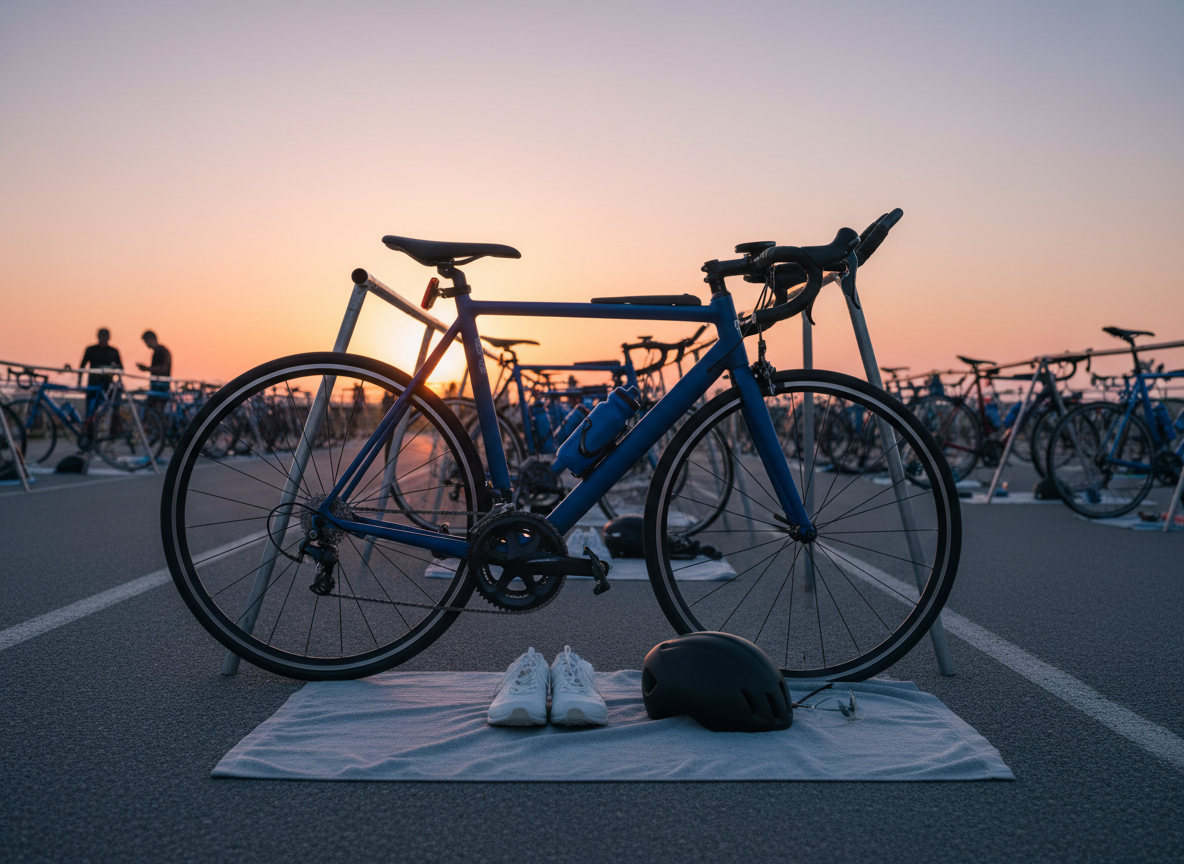
1. Rack your bike first
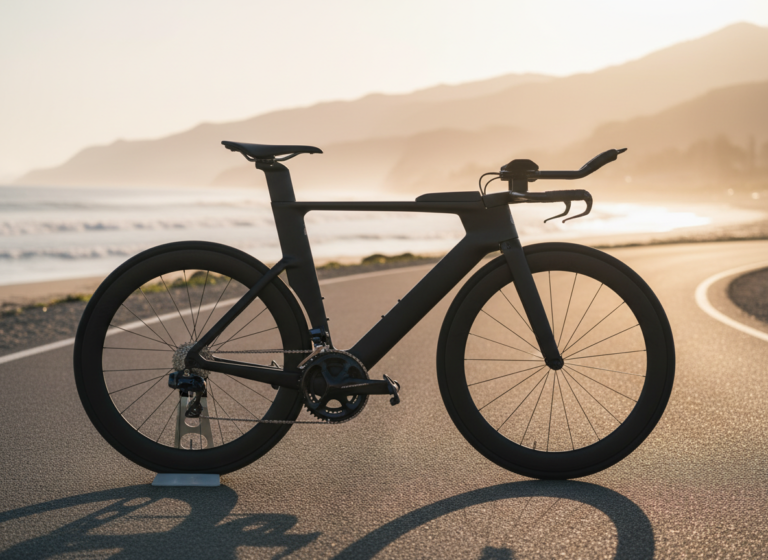
Hang your bike by the saddle or handlebars on the rack (check which your race uses — some specify). Position it so you can grab it and go without fighting your own gear.
2. Lay out gear in the order you’ll use it
Working left to right (or in the order you’ll reach for things), a typical layout looks like:
- Towel — laid flat, marks your spot and keeps your feet clean getting out of wetsuit/swim gear
- Bike shoes (if not already clipped into pedals) — positioned so you can step straight into them
- Helmet — placed upside down on your aero bars or handlebars, sunglasses tucked inside if you’re wearing them, so grabbing the helmet grabs both
- Race belt with number — pre-threaded, ready to grab and clip on the move
- Bike nutrition — gels or a pre-filled bottle already on the bike, not something you dig for
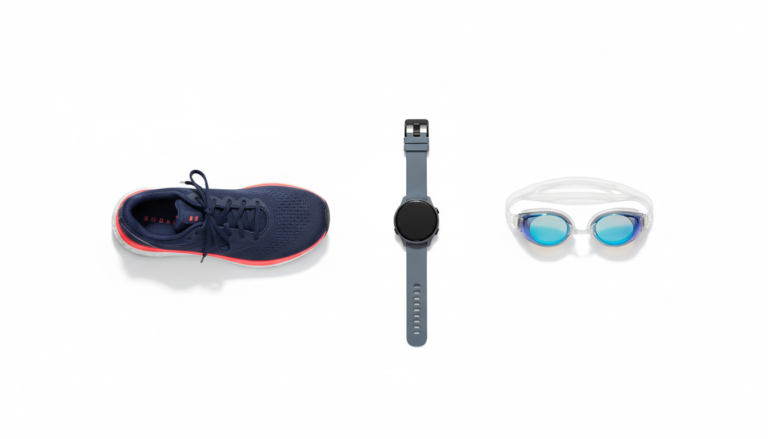
- Running shoes — laced or set up with elastic laces (see below) for a fast T2
- Running hat/visor — if you’re wearing one
3. Keep it tight and simple
Race organizers give you a small footprint — don’t spread your gear across your neighbor’s space. A small towel and a compact layout also means less to lose track of when you’re running on adrenaline.
4. Practice the sequence, not just the setup
The layout only helps if your body already knows the motions. Practice your wetsuit strip, a flying mount (if you’re comfortable with it) or standard mount, and swapping from bike shoes to running shoes at home before race day. Transitions are a skill, not just a table of gear.
Gear That Actually Speeds Up Transitions
Elastic no-tie laces — the single cheapest, highest-leverage upgrade for T2. Slip your shoes on without bending down to tie anything.
Race belt — clip your number on the move instead of fumbling with safety pins.
Shop a Race Number Belt at Amazon →
Body Glide or similar anti-chafe balm — apply before the swim so you’re not dealing with wetsuit chafing mid-bike or mid-run.
Shop Body Glide Original at Amazon →
A small transition towel or mat — marks your spot clearly (useful in a sea of identical bike racks) and keeps your feet clean.
Shop Transition Mats at TriathleteStore.com →
Common First-Timer Mistakes
- Forgetting where your rack spot is. Count rack numbers or use a landmark — after a swim, in a wetsuit, half your brain isn’t working yet.
- Not practicing the wetsuit strip. A wetsuit that fought you in your bedroom will fight you twice as hard with adrenaline and wet skin.
- Overpacking the transition space. Extra gear you don’t need is extra time spent searching and extra chances to knock something over.
- Riding or mounting before the line. This is an easy, avoidable penalty — know exactly where your race’s mount and dismount lines are before you start.
Bottom Line
A fast transition isn’t about spending money — it’s about a simple, practiced routine and a handful of small gear choices (elastic laces, a race belt) that remove fumbling from the equation. Walk your transition setup through in your head — or better, out loud — a few times before race morning, and it’ll feel automatic when it counts.
Download our free Sprint Triathlon Gear Checklist and check out our Best Triathlon Wetsuits guide for more.

One Comment