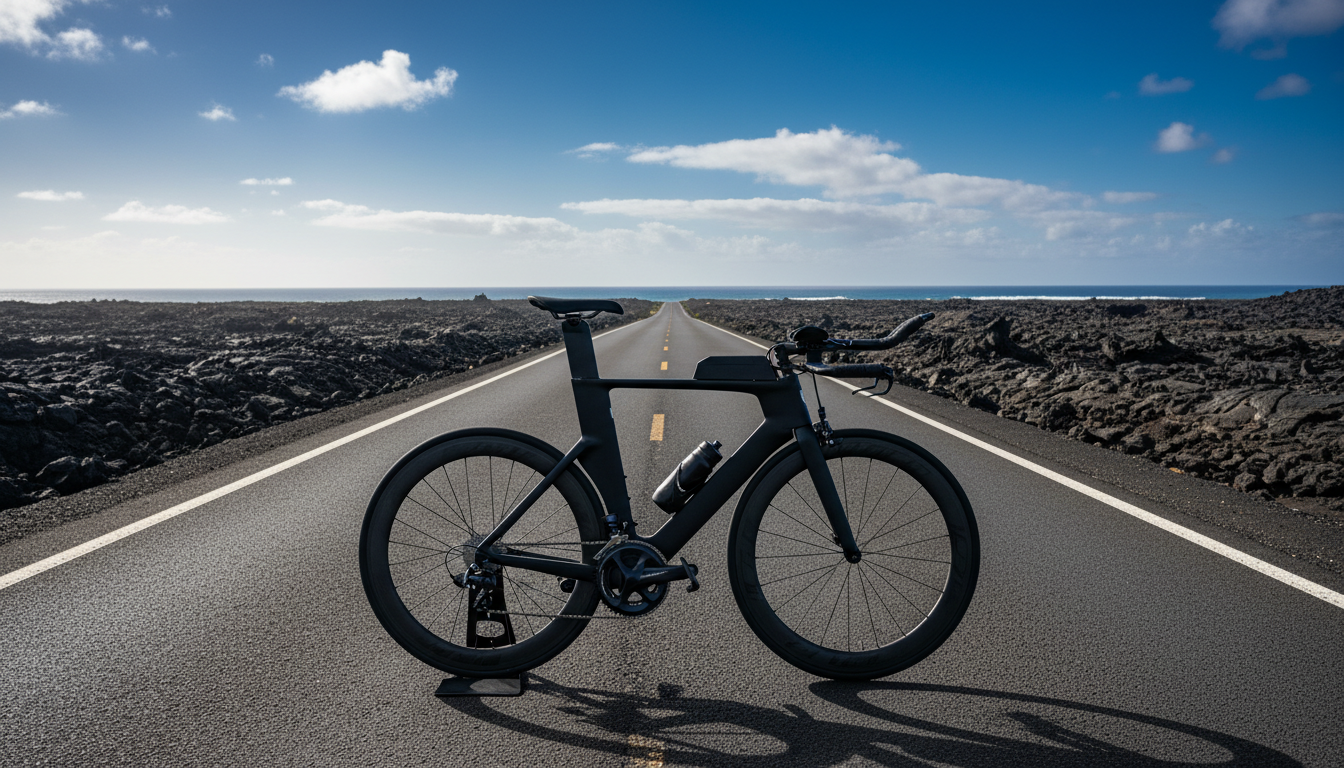
What the Kona Podium Rode: The Bikes Behind the 2026 Ironman World Championship
🏁 Race Tech
What the Kona Podium Rode
This post contains affiliate links — we may earn a commission at no extra cost to you. See our full disclosure.
Last Saturday’s Ironman World Championship in Kona was one of the most dramatic in years. Vincent Luis won on his Kona debut in what he’s said is his final season, and Taylor Knibb took the women’s title after race leader Solveig Løvseth collapsed inside the final mile. Penalties, withdrawals, and late-race meltdowns reshuffled both podiums.
Here’s what all six podium finishers rode for 180 km on the Queen K, what their setups have in common, and which parts of a $10,000-plus pro build an age-grouper can actually borrow.
The Podium at a Glance
| Athlete | Finish | Bike Split | Frame | Drivetrain | Tires |
|---|---|---|---|---|---|
| 1. Vincent Luis (FRA) | 7:47:27 | 4:15:41 | Specialized | SRAM | Not confirmed |
| 2. Gustav Iden (NOR) | 7:49:02 | 4:17:09 | Giant Trinity Advanced SL | Shimano 1x | Pirelli P Zero Race TLR |
| 3. Matthew Marquardt (USA) | 7:49:58 | 4:11:27 | Trek Speed Concept | SRAM 1x | Continental |
| 1. Taylor Knibb (USA) | 8:36:29 | 4:40:07 | Trek Speed Concept | SRAM 2x | Continental GP 5000 S TR |
| 2. Laura Philipp (GER) | 8:39:34 | 4:43:00 | Canyon Speedmax | SRAM | Schwalbe Pro One |
| 3. Julie Derron (SUI) | 8:46:25 | 4:49:35 | Canyon Speedmax | Shimano | Continental GP 5000 S TR |
The Men’s Podium
1. Vincent Luis — Specialized
The two-time short-course world champion didn’t win Kona on the bike. He rode a controlled 4:15:41, then ran down a fading Magnus Ditlev around mile 21 of the marathon. His bike is a Specialized time-trial frame, the brand he’s raced on for several seasons (he rode a Shiv TT at the 2025 70.3 World Championship). It’s set up with SRAM shifting, Wattshop extensions, TriRig hydration front and rear, and a Wove saddle. Slowtwitch’s gear list shows his wheels as unbranded, which is common when a pro races without a wheel sponsor.
Worth noting: Luis’s front end is built from aftermarket parts rather than Specialized’s stock cockpit. Pros obsess over the extensions and hydration more than the frame, because that’s where they can fine-tune both position and drag.
2. Gustav Iden — Giant Trinity Advanced SL
The 2019 Ironman 70.3 and 2022 Ironman world champion rode 4:17:09 despite a three-minute penalty, then posted the fastest run among the top men (2:36:57) to take second. The result also clinched him the 2026 Ironman Pro Series title. His Giant Trinity Advanced SL runs a Shimano 1x drivetrain with a huge 62-tooth chainring, an 11-28 cassette, 165 mm cranks, and a Shimano power meter. Wheels are CADEX (Giant’s premium component brand), shod with Pirelli P Zero Race TLR tires, and he uses a Cadex/TriRig front bottle and EZ Gains rear mount.
Worth noting: A single big chainring is now standard on many pro tri bikes. Kona’s Queen K is mostly long, steady drags, so a 1x setup cuts weight and drag without giving up much gear range.
3. Matthew Marquardt — Trek Speed Concept
Marquardt was the strongest rider on the men’s podium, with a 4:11:27 split. He was leading the race when a drafting penalty dropped him back, and he fought back to third on the run. He rides Trek’s Speed Concept with a SRAM 1x drivetrain, SRAM crank-based power meter, 165 mm cranks, Princeton CarbonWorks wheels, Continental tires, a custom front end and hydration, and a JCOB saddle.
The Women’s Podium
1. Taylor Knibb — Trek Speed Concept
Knibb traded the lead with Lucy Charles-Barclay early in the bike, took over around mile 33, and rode 4:40:07, the fastest bike split among the top women. Her Speed Concept runs a SRAM 2x drivetrain with a crank-based power meter, Bontrager Aeolus RSL 75 wheels, Continental Grand Prix 5000 S TR tires, a Drag2Zero cockpit and front bottle, an EZ Gains rear mount, and a Trek Ballista helmet.
Worth noting: Knibb uses 155 mm cranks, short even for a smaller rider. Shorter cranks open up the hip angle in a low aero position, and many pros have moved to them.
2. Laura Philipp — Canyon Speedmax
Philipp came out of the water seven minutes behind Knibb, rode 4:43:00, and then ran the fastest women’s marathon (2:50:43) to finish second. Her Canyon Speedmax uses SRAM shifting, Swiss Side Hadron wheels, Schwalbe Pro One tires, an ISM saddle, and Canyon’s own cockpit and integrated hydration.
3. Julie Derron — Canyon Speedmax
Derron’s 4:49:35 bike split includes a three-minute drafting penalty, and she still held on for third. She also rides a Canyon Speedmax with Canyon’s stock cockpit and hydration, but with Shimano shifting, DT Swiss ARC 1100 wheels, Continental tires, and a Selle Italia saddle.
Worth noting: Of the six podium bikes, only the two Canyons use the stock cockpit and hydration. That’s a good sign for anyone considering a Speedmax: the built-in front end is good enough for a world championship podium.
Pros vs. Age-Groupers: What the Kona Bike Count Shows
Slowtwitch’s annual Kona bike count tallies the age-group field (pros aren’t included). In 2026, Canyon was the most popular frame with 509 bikes (22.5%), followed by Cervélo (387) and Trek (311). DT Swiss led wheels at 23.9%, ahead of Zipp at 18.2%, and Shimano drivetrains outnumbered SRAM about 62% to 38%.
The podium looked a little different. SRAM was on four of the six podium bikes, and nobody on the podium rode a Cervélo. But the brands are close enough that the takeaway is the same one you hear from every bike fitter: the frame matters less than the position you can hold on it.
What Age-Groupers Can Borrow From the Pros
Front hydration. All six podium bikes carry a between-the-arms bottle. It keeps you drinking without sitting up, and it’s one of the cheapest aero upgrades there is.
Fast tires. Every podium rider whose tires were reported ran a premium race tire from Continental, Pirelli, or Schwalbe. Rolling resistance adds up over 180 km, and a good set of race tires costs far less than race wheels.
A fit before parts. Short cranks, custom extensions, and specific saddles all serve one goal: a low position the rider can hold for four-plus hours and still run off the bike. A professional bike fit is the best money most age-groupers can spend on a tri bike, and a fitter can tell you whether shorter cranks make sense for you.
The same frame family, for less. You can’t buy Philipp’s or Derron’s exact build, but Canyon’s Speedmax CF 7 Di2 puts you on the same frame family with electronic shifting, a power meter, carbon aero wheels, and integrated storage. It was $5,999 when we last checked in late September. For other options in that range, see our Best Value Triathlon Bikes guide.
Shop the Canyon Speedmax CF 7 Di2 at Canyon.com →
A Note on Our Sources
Results and splits come from the official results as reported by Tri247 and Slowtwitch. Equipment details come from Slowtwitch’s pre-race team gear lists and its post-race gear list for the fastest riders. Pros sometimes swap wheels, tires, or gearing on race morning, so treat smaller details like chainring size as their usual setup rather than a guaranteed race-day spec.
Building your own setup this winter? See our Best Value Triathlon Bikes guide, our Zwift vs TrainerRoad comparison for indoor training, and this week’s deals roundup for discounted trainers and tri suits.


One Comment