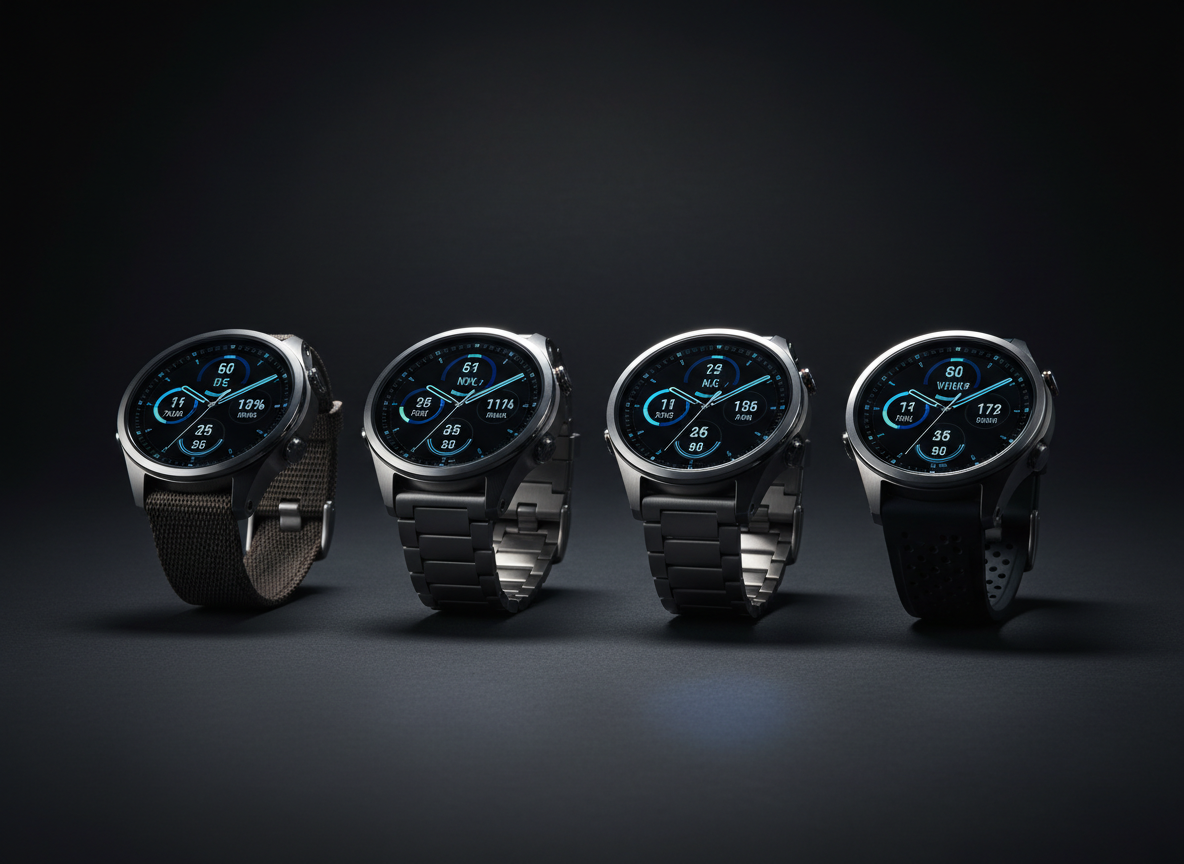
Best Garmin Running & Triathlon Watches in 2026: Full Forerunner Lineup Compared
⌚ Watch Comparison
Garmin Running & Triathlon Watches Compared
This post contains affiliate links — we may earn a commission at no extra cost to you. See our full disclosure.
Garmin refreshed its entire Forerunner lineup in 2025 and 2026, and the old advice — “just get the 265 or 965” — is out of date. The current lineup is the Forerunner 70, 170, 570, and 970, and each one targets a genuinely different kind of athlete: pure runners who want simple and light, runners who want a few smart extras, and triathletes who need real multisport tracking.
The single most important thing to know before you shop: not every Forerunner supports triathlon multisport tracking. The 70 and 170 are running-focused watches — the 170 adds open-water swim tracking, but neither is built as a true multisport race watch. The 570 and 970 are both marketed explicitly as running and triathlon watches, with auto-transitioning multisport modes. If you race triathlons, start your search at the 570.
The Short Answer
Forerunner 70 (~$249): The simplest, lightest, longest-battery option. Pure running (and pool swimming) only — no altimeter, no open-water swim tracking, no multisport mode. Best for runners who want Garmin’s training intelligence without paying for features they won’t use.
Forerunner 170 (~$299, or ~$349 for the Music version): Adds an altimeter, Garmin Pay, VO2 max, and open-water swim tracking on top of the 70. Still not sold as a triathlon watch, but a reasonable step up for runners who also swim casually.
Forerunner 570 (~$549.99): The new mid-range triathlon watch. Full multisport support with structured triathlon workouts, AMOLED display, built-in speaker/mic, and 23 activity profiles — but no onboard maps.
Forerunner 970 (~$749.99): The flagship. Everything the 570 has, plus full-color onboard maps, a titanium bezel with sapphire lens, a built-in flashlight, ECG and skin temperature tracking, and nearly double the GPS battery life.
Specs Comparison
| Feature | Forerunner 70 | Forerunner 170 | Forerunner 570 | Forerunner 970 |
|---|---|---|---|---|
| Price | ~$249 | ~$299 (~$349 Music) | ~$549.99 | ~$749.99 |
| Display | AMOLED, 43mm | AMOLED | 1.2″/1.4″ AMOLED (42/47mm) | 1.4″ AMOLED, 454×454 |
| Weight | Lightest in lineup | Similar to 70 | 42g (42mm) / 50g (47mm) | 56g |
| Battery (smartwatch) | Up to 13 days | Up to 10 days | Up to 11 days | Up to 15 days |
| Battery (GPS) | ~23 hours | 17–20 hours | Up to 18 hours | Up to 26 hours |
| Onboard maps | No | No | No | Yes, full-color |
| Altimeter | No | Yes | Yes | Yes |
| Open-water swim tracking | No (pool only) | Yes | Yes | Yes |
| Multisport/triathlon mode | No | Not marketed as tri-capable | Yes | Yes |
| Music storage | No | 4GB (Music version) | 8GB | 32GB |
| Bezel | Standard | Standard | Aluminum | Titanium + sapphire lens |
| Extras | — | Garmin Pay, VO2 max | Speaker/mic, voice commands, Evening Report | + LED flashlight, ECG, skin temp |
Forerunner 70 — The Simple, Long-Battery Option (~$249)
The 70 is Garmin’s answer to “I just want good running data without the bloat.” It runs the same training software as every other current Forerunner — Training Readiness, HRV Status, wrist-based running power, suggested workouts — in the lightest, longest-battery package Garmin sells. What it drops is the extras: no altimeter, no open-water swim tracking, no Garmin Pay.
Who it’s for: Runners who want Garmin’s core training intelligence at the lowest current price point, and don’t need elevation data, contactless payments, or swim tracking. Not a triathlon watch — if you’re shopping as a triathlete, skip this one.
Shop the Garmin Forerunner 70 at Amazon →
Forerunner 170 — A Step Up, Still Not a Tri Watch (~$299–$349)
The 170 takes everything the 70 does and adds a barometric altimeter, compass, Garmin Pay, VO2 max estimation, and open-water swim tracking. The Music version adds 4GB of onboard storage for playlists.
That open-water swim tracking makes the 170 tempting for casual triathletes, but reviewers are consistent on this point: it’s not built or marketed as a triathlon race watch the way the 570 and 970 are — there’s no dedicated auto-transitioning multisport mode. Treat the swim tracking as a nice-to-have for open-water training, not a reason to skip the 570 if you’re actually racing triathlons.
Who it’s for: Runners who want elevation data and contactless payments, and who swim casually in open water but aren’t racing multisport events.
Shop the Garmin Forerunner 170 at Amazon →
Forerunner 570 — The New Mid-Range Triathlon Watch (~$549.99)
This is where triathlon shopping should start. The 570 is explicitly sold as a “GPS Running & Triathlon Smartwatch,” with full multisport support, structured triathlon workouts, and auto-transitions between swim, bike, and run. It adds a built-in speaker and microphone (for calls and voice commands), Evening Report summaries, and 23 activity profiles including some outside the core three sports.
What it doesn’t have: onboard maps. You get breadcrumb-style navigation (a line showing your route), not the full-color topo and road maps of the 970.
Who it’s for: Triathletes and multisport athletes who want real tri tracking and don’t specifically need onboard maps — the large majority of racers doing courses they’ve recon’d or that are well-marked.
Shop the Garmin Forerunner 570 at Amazon →
Forerunner 970 — The Flagship (~$749.99)
The 970 is the most capable Forerunner Garmin has ever made. It carries over everything from the 570 — full multisport, structured workouts, voice/speaker — and adds full-color onboard maps, a titanium bezel with a sapphire crystal lens, a built-in LED flashlight (handy for early-morning transitions or night trail running), ECG capability, skin temperature tracking, and close to 50% more GPS battery life than the 570.
Who it’s for: Ironman-distance and long-course triathletes who want real navigation on the wrist, ultra-distance athletes who need the longer battery, and anyone who wants the best Garmin makes and doesn’t mind paying for it.
Shop the Garmin Forerunner 970 at Amazon →
What About the Fenix 8 or Older Forerunners?
Fenix 8: Garmin’s rugged multisport flagship, built more for ultra-endurance and outdoor adventure than pure road triathlon — solar charging options, a tougher case, and even longer battery life than the 970. Worth a look if you want maximum durability and battery beyond what the 970 offers, but it’s a heavier, bulkier watch and a step outside the Forerunner line’s running-first design. We’ll cover it in a separate comparison.
Forerunner 265 and 965 (previous generation): Garmin’s prior flagships, now superseded by the 570 and 970 respectively. They’re no longer the current models, but they still show up at a real discount at retailers clearing old stock — both were excellent watches in their day, with full multisport support and the same core training software as the current lineup. If you see one heavily discounted, it’s not a bad buy; just know you’re getting last generation’s hardware (older display, no speaker/mic, less battery than the current equivalent tier).
Which Should You Buy?
- Pure runner, tightest budget: Forerunner 70
- Runner who wants elevation data + casual open-water swims: Forerunner 170
- Triathlete, want real multisport tracking without paying for maps: Forerunner 570
- Triathlete or ultra athlete who wants maps, max battery, and every feature: Forerunner 970
- Found a discounted Forerunner 265 or 965: Still a legitimate multisport watch if the price is right
The Bottom Line
The days of “just compare the 265 and 965” are over — Garmin’s current lineup spreads much further, from a lightweight $249 running watch with no multisport features at all up to a $750 triathlon flagship with onboard maps and a flashlight. The number one filter is simple: if you race triathlons, you want the 570 or 970. If you’re a pure runner, the 70 or 170 will save you real money without costing you any of the training intelligence that actually makes you faster.
Check out this week’s Best Deals for Runners, Cyclists, and Triathletes for current Garmin pricing, and our 12 Training Gadgets Every Endurance Athlete Should Know About guide.

8 Comments