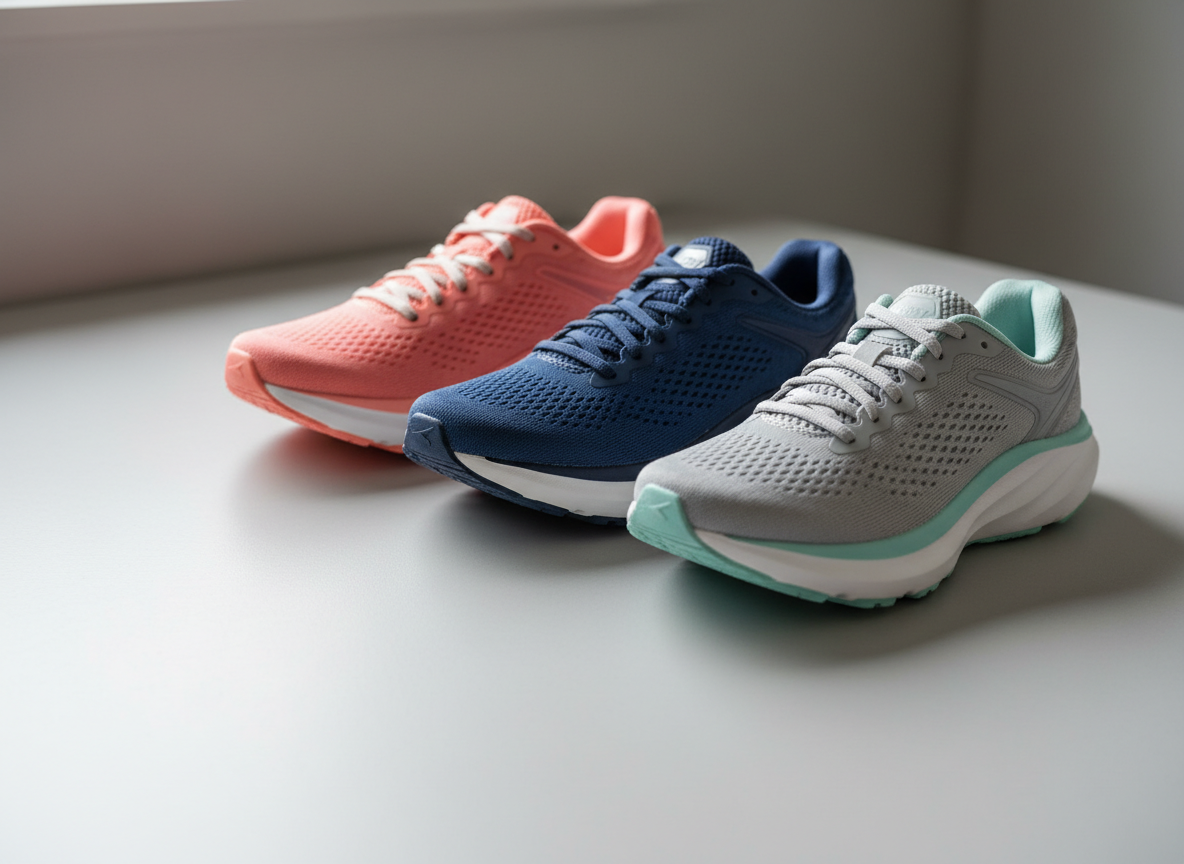
Hoka Running Shoes Compared (2026): Which Hoka Should You Buy?
👟 Shoe Guide
Hoka Running Shoes Compared
This post contains affiliate links — we may earn a commission at no extra cost to you. See our full disclosure.
Hoka sells more than ten road running shoes right now, and from the outside a lot of them look the same: thick, rockered, and expensive. They aren’t. A Bondi and a Mach are built for completely different runs, and picking the wrong one is how people end up deciding they “don’t like Hokas.”
This guide covers the 11 main shoes in Hoka’s current US road lineup as of October 2026, grouped by what each one is for, with the specs that actually matter and a straight answer on who should buy it.
The Lineup at a Glance
| Shoe | Type | Price | Stack (heel / forefoot) | Drop | Plate |
|---|---|---|---|---|---|
| Rincon 5 | Budget daily trainer | $125 | 38 / 30 mm | 8 mm | None |
| Mach 7 | Light daily trainer / tempo | $145 | 37 / 32 mm | 5 mm | None |
| Clifton 11 | Neutral daily trainer | $155 | 42 / 34 mm | 8 mm | None |
| Clifton PRO | Premium daily trainer | $165 | 42 / 34 mm | 8 mm | None |
| Bondi 9 | Max cushion | $175 | 43 / 38 mm | 5 mm | None |
| Arahi 9 | Stability | $155 | 39 / 31 mm | 8 mm | None |
| Gaviota 6 | Max stability | $180 | 39 / 33 mm | 6 mm | None |
| Mach X 3 | Plated super trainer | $190 | 44 / 39 mm | 5 mm | Pebax |
| Skyward X 2 | Max-cushion super trainer | $225 | 44 / 39 mm | 5 mm | Carbon |
| Rocket X 3 | Race | $250 | 40 / 33 mm | 7 mm | Carbon |
| Cielo X1 3.0 | Race | $275 | 38 / 31 mm | 7 mm | Carbon |
Quick Picks
- Best for most runners: Clifton 11
- Best for recovery runs and long, slow miles: Bondi 9
- Best if your feet roll inward (overpronation): Arahi 9
- Best for wide feet that need support: Gaviota 6
- Best one shoe for easy days and workouts: Mach 7
- Best value: Rincon 5
- Best for marathon training long runs: Mach X 3
- Best for race day: Rocket X 3 (durable) or Cielo X1 3.0 (fastest feel)
Everyday Trainers
Hoka Clifton 11 ($155)
The Clifton is the shoe most people picture when they think of Hoka, and the 11th version keeps the formula: a soft, compression-molded EVA midsole, an 8 mm drop, and a smooth rocker that makes easy miles feel easy. Reviewers like how plush and breathable it is. The tradeoff is that it isn’t bouncy, and the toebox runs narrow.
Who it’s for: Newer runners and anyone who wants one comfortable shoe for most of their weekly miles. Also comes in a waterproof GTX version ($175).
Hoka Clifton PRO ($165)
New this summer, the Clifton PRO uses the same 42/34 mm geometry as the Clifton 11 but swaps in a supercritical EVA foam (Hoka calls it PROGLIDE+) and a more aggressive rocker. Reviewers say it absorbs impact better than the standard Clifton, though it still isn’t especially springy for a shoe with “PRO” in the name.
Who it’s for: Heel strikers who like the Clifton’s fit and want a little more protection for $10 more.
Shop the Clifton PRO at Hoka →
Hoka Mach 7 ($145)
The Mach is the lightest of Hoka’s everyday trainers and the one that feels most like a performance shoe. It uses supercritical EVA foam with a lower 5 mm drop, so it’s comfortable enough for easy days and quick enough for tempo runs and strides. Reviewers like how light and agile it feels; the fit is snug, and some runners find the stiff heel counter rubs the Achilles.
Who it’s for: Runners with narrow to average feet who want one shoe for nearly everything. A good fit for triathletes, too, since it’s light enough for brick runs off the bike.
Hoka Rincon 5 ($125)
The Rincon has always been Hoka’s budget option, and at $125 it’s still the cheapest road shoe in the lineup. Version 5 changed its personality, though: the drop went from 5 mm to 8 mm, and early reviews describe it as more durable and stable but noticeably heavier and firmer than the featherweight Rincon 4.
Who it’s for: Runners who want a Hoka on a budget and care more about durability than a light, fast feel.
Max Cushion
Hoka Bondi 9 ($175)
The Bondi is Hoka’s most cushioned everyday shoe, with 43 mm of supercritical EVA under the heel and a low 5 mm drop. It’s built for slow, steady miles and recovery days, not speed. Reviewers love the cushioning; the common complaints are a narrow toebox and a clunky feel if you try to pick up the pace. Hoka currently has it on sale for $140 in select colors.
Who it’s for: Higher-mileage runners who want maximum protection on recovery days, and anyone who spends long hours on their feet.
Stability
Hoka Arahi 9 ($155)
The Arahi is Hoka’s everyday stability shoe. Instead of a traditional medial post, it uses Hoka’s H-Frame, a firmer foam structure that guides the foot without making the shoe feel stiff. Reviewers say the support is subtle and the outsole holds up well; the downsides are a ride without much bounce and a slightly heavier, pricier shoe than the Arahi 8.
Who it’s for: Runners who overpronate (feet roll inward) and want light-touch support for daily miles.
Hoka Gaviota 6 ($180)
The Gaviota is the Arahi’s bigger sibling: more support, a wider platform, and an X-Wide option. Reviewers rate it as very stable and roomy, but note the foam feels dated next to Hoka’s newer supercritical shoes, which makes the $180 price harder to justify.
Who it’s for: Runners with wide feet or more significant overpronation who want maximum stability on easy runs.
Plated Super Trainers
Super trainers pair race-style foam (and often a plate) with a more durable, more stable build than a race shoe. They make long runs and marathon-pace workouts feel easier without burning through a $250 racer.
Hoka Mach X 3 ($190)
The Mach X 3 layers PEBA foam over an EVA base with a Pebax plate in between, so it has some of a race shoe’s snap while staying stable enough for long runs. Reviewers say this version fixes the heel blisters some runners got in the Mach X 2. The toebox is tapered, so wide feet should try it on first.
Who it’s for: Marathon and half marathon runners who want one shoe for long runs and tempo workouts.
Hoka Skyward X 2 ($225)
The Skyward X 2 is a max-cushion shoe with a carbon plate: PEBA foam on top of supercritical EVA, 44 mm of stack under the heel. Reviewers praise the shock absorption and stability, but it’s an easy-pace shoe at a race-shoe price.
Who it’s for: Runners logging big weekly mileage who want maximum cushioning on long runs and don’t mind paying for it.
Shop the Skyward X 2 at Hoka →
Race Shoes
Hoka Rocket X 3 ($250)
The Rocket X 3 is Hoka’s more durable carbon racer, with dual-density PEBA foam and a winged carbon plate. Reviewers like that it holds up for training and racing alike, but it’s heavier than rival super shoes and doesn’t feel quite as fast.
Who it’s for: Runners who want one carbon shoe for marathon-pace workouts and race day.
Hoka Cielo X1 3.0 ($275)
The Cielo X1 is Hoka’s flagship marathon racer: PEBA foam, a carbon plate, and an aggressive rocker. Reviewers rate its cushioning and energy return highly. The catch is a tight fit, an extreme rocker that takes getting used to, and durability that’s better suited to race days than training.
Who it’s for: Experienced runners chasing a marathon or half marathon PR who’ll save it for race day.
Shop the Cielo X1 3.0 at Hoka →
How to Choose
Start with what the shoe is for. Most runners need one daily trainer before anything else. Add a max-cushion shoe for recovery days or a plated shoe for long runs and workouts once you’re running four or more days a week.
Know your drop. Hoka’s shoes range from 5 mm to 8 mm. If you’re coming from a traditional 10–12 mm shoe, the 8 mm Clifton, Arahi, or Rincon will feel like the smallest change. Lower-drop shoes like the Bondi and Mach put a bit more load on the calves and Achilles at first.
Check the fit. Reviewers flag narrow toeboxes on several current Hokas, including the Clifton 11, Bondi 9, Mach 7, and Mach X 3. If you have wide feet, look for wide sizing or start with the Gaviota 6.
Watch for last year’s model. When a new version launches, the old one often drops in price. The Clifton 10 and Arahi 8 were both marked down on hoka.com this week, though sizes are selling out.
Training for a marathon? See our Best Running Shoes for Marathon Training guide, and check our weekly deals roundup for current Hoka markdowns.
One Comment